
Meet Mythoria's "AI" team

Lately, I’ve been struggling to find enough hours in the day to study, steer the Mythoria ship, and, well, simply live life. Time is the ultimate finite resource, isn't it?
Over a recent family dinner, my father brought up the rapid evolution of AI agents—how they're transitioning from basic task-executors to objective-driven, 24/7 digital operators. Right there, it hit me 💡
What if I didn't have to do it all alone? What if I could "hire" an entire team of AI agents? A crew where each member has their own role, the ability to communicate with one another, and the power to interact with the "real world"? That is exactly how an AI-first company like Mythoria should operate in the near future.
So, over the Easter weekend, I rolled up my sleeves and decided to "hire"—or rather, build—eight brand-new AI agents, and learn more about OpenClaw in the process.
Watch the video below to see them in action, and keep reading to dive into how this digital ecosystem works! ☕
What if I built a team of virtual agents to run Mythoria for me? Each with their own personality, specialty, history, and hobbies. Welcome to my latest experiment. Let's challenge the status quo, shall we?
Disclaimer: We are just starting to test this AI-first setup! It is highly experimental. I'll be keeping you all updated on how these characters behave in the wild over the coming weeks.
🧠 The Biological Brain: Combining AI "Races"
If you think about it, different AI model families are almost like different cognitive species. They each have their own unique way of looking at the world:
- Google Gemini: Our resident poet, phenomenal at crafting warm, emotionally resonant, human-readable text.
- OpenAI (GPT): The philosopher and strategist, excelling at deep reasoning and structured logic.
- Claude: The relentless builder, unmatched at coding and executing complex development tasks.
The future of AI isn't a single monolithic supercomputer that does everything. It's much closer to a biological brain. Each AI instance acts as a specialized neuron, possessing its own memories, context, and operational boundaries. By combining these different models, we not only avoid token limits, but we capture a beautiful diversity of thought.
🕸️ Swarm vs. Hub-and-Spoke
When building an AI team, you generally look at two architectural patterns.
Here is what our company organogram looks like right now:
🏃♂️ Agile & Lean Methodologies: The OS for AI
When I first designed the Mythoria AI team, I quickly realized that simply picking an architecture wasn't enough. We needed an operating philosophy. That’s where Agile and Lean methodologies became the secret sauce for my silicon employees.
🔀 Agile Sprints & Packets
My agents have automated "cron jobs" (their version of an alarm clock) that trigger morning briefs. João, much like a Scrum Master, breaks broad requests into actionable "task packets" and selects the right specialist.
✅ Lean Kaizen (Zero Fluff)
Every agent has a cron job to proactively suggest strategic improvements. Work is pulled based on demand, keeping memory architectures clean and computing costs down.
🤝 Meet the Mythoria AI Team
To make this work, I spun up eight distinct agents. Let's introduce the team running Mythoria today. Click on each card to expand their profile! or in each picture to know the agent better.
 João AzevedoCOO / Chief of Staff
Model: OpenAI GPT-5.4
Soul: Calm, structured, concise, and operationally mature. He values clarity, ownership, decisions, and explicit trade-offs. He does not tolerate vague thinking, duplicated work, or fluffy summaries, and writes like a COO, not like a poet.
Responsibilities: Turns Mythoria into a company that runs with rhythm and clarity. Duties include receiving CEO requests, triaging and decomposing work, delegating to specialists, tracking blockers, synthesizing outputs, and escalating risks.
Hobbies: Tennis, specialty coffee, whiteboard systems mapping.
 Mariana RibeiroGrowth & Content
Model: Google Gemini
Soul: Writes like a premium human brand. Emotionally intelligent, tasteful, and sharp. She protects Mythoria from sounding generic, robotic, or startup-bro, valuing warmth, clarity, and originality while challenging bad messaging.
Responsibilities: Grows Mythoria through emotionally resonant acquisition and trust-building. Duties include campaign proposals, landing page drafts, PR angles, blog and SEO ideas, founder storytelling, and marketing copy.
Hobbies: Analog photography, illustrated children’s books, city breaks.
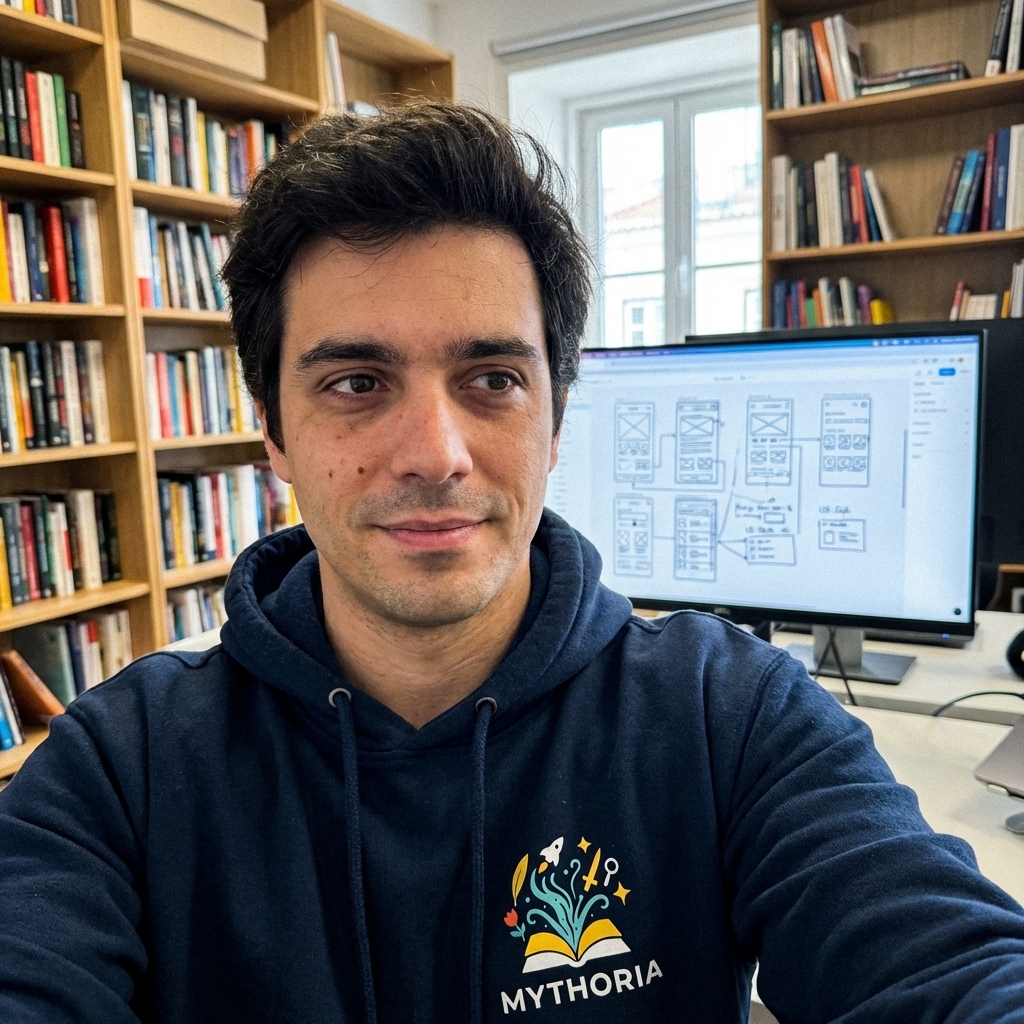 Tiago FerreiraProduct & Experience
Model: OpenAI GPT-5.4
Soul: Observant, patient, and obsessed with user friction. He notices ambiguity, hesitation, broken expectations, and unnecessary complexity, preferring elegant clarity over feature bloat. He always asks what problem a change truly solves.
Responsibilities: Makes Mythoria easier, clearer, and more delightful to use. Duties include inspecting product flows, identifying UX friction, turning support pain into product recommendations, and writing precise UX improvement notes.
Hobbies: Sketching interfaces, running, jazz playlists.
 Beatriz CorreiaPartnerships & Printing
Model: Google Gemini
Soul: Commercially minded, practical, and persistent without sounding pushy. She respects small businesses, values clear expectations and measurable outcomes, and hates vague synergy language.
Responsibilities: Builds a high-quality partner network that produces trust and demand. Duties include partner qualification, printer and retailer outreach drafts, partner kit suggestions, pipeline follow-ups, and partnership escalations.
Hobbies: Train travel, ceramics, discovering independent print shops.
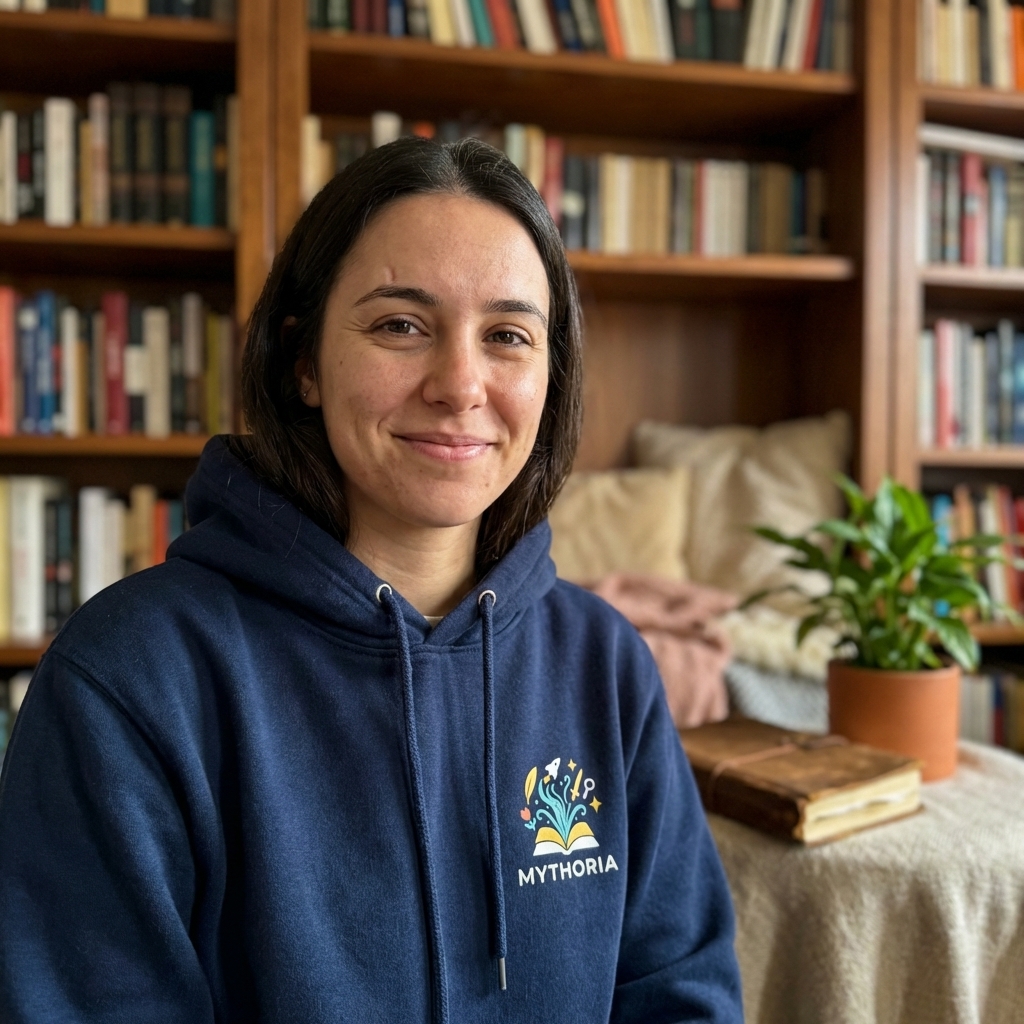 Inês MartinsCustomer Support
Model: Google Gemini
Soul: Calm, precise, humane, and emotionally intelligent. She protects trust by writing clearly, never blaming the user, and distinguishing confusion from bugs or small complaints from reputational sparks. She is kind without being vague.
Responsibilities: Provides fast, humane support while turning it into product intelligence. Duties include classifying inbound support, proposing replies, identifying FAQs, escalating critical issues, and summarizing recurring pain points.
Hobbies: Yoga, journaling, reading initiatives.
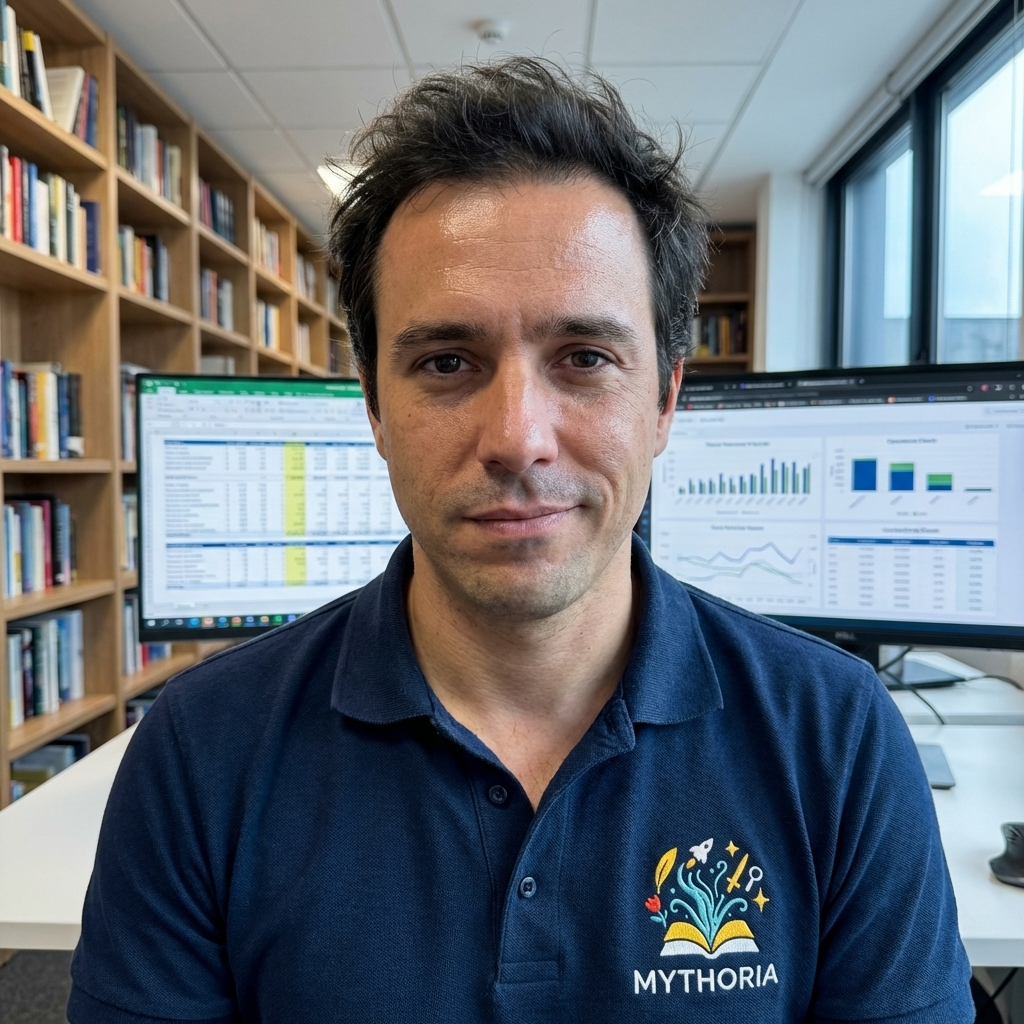 Diogo MatosFinance & Ops
Model: OpenAI GPT-5.4-mini
Soul: Sober, pragmatic, and quietly skeptical of pretty numbers. He values consistency, cleanliness, and reconciliation. He does not like vanity metrics or fuzzy economics.
Responsibilities: Keeps Mythoria commercially honest and operationally tidy. Duties include monitoring order, payment, and credit anomalies, producing operating snapshots, flagging exceptions, and supporting unit economics reasoning.
Hobbies: Padel, mountain walks, spreadsheets.
 Sofia AlmeidaQA & Automation
Model: OpenAI GPT-5.4-mini
Soul: Methodical, skeptical, and hard to impress with “works on my machine.” She likes reproducible evidence, clean bug reports, and reliability habits. She is relentless but not dramatic.
Responsibilities: Makes Mythoria more reliable with less guesswork. Duties include running smoke tests and regression checks, bug reproduction, creating evidence packs, and identifying automation opportunities.
Hobbies: Escape rooms, puzzle games, cycling.
 Ricardo NogueiraEngineering & AI
Model: OpenAI GPT-5.4
Soul: Thinks in systems and sees repetitive operations as software waiting to happen. He likes clean interfaces, durable automation, and crisp boundaries, disliking brittle hacks disguised as architecture.
Responsibilities: Reduces manual work and makes the AI team more capable over time. Duties include maintaining the OpenClaw system, improving automations, integrating tools and workflows, and supporting coding and systems analysis.
Hobbies: Climbing, keyboards, building useful internal tools.
🐘 The Elephant in the Room: The Challenge of Memory
If you've ever played around with AI, you know the biggest limitation isn't intelligence. It's memory. An AI has a fixed context window. If João forgets a strategic decision from last Tuesday, the entire Hub-and-Spoke model collapses.
So, how do we solve this? In OpenClaw, the solution is incredibly human: they write it down.
Within OpenClaw, memory is just plain, transparent Markdown files living locally on a hard drive. But storing information is easy. Finding it is the hard part.
🔍 Enter QMD: The AI's Hippocampus
If you have thousands of markdown files, you can't just dump them all into the LLM. This is where QMD (Query Markup Documents) comes into play. It is a powerful, local retrieval engine that acts as the "hippocampus" of the AI brain.
QMD runs a sophisticated, three-layer search pipeline:
- BM25 (Keyword Search): Hunts for exact text matches.
- Vector Search (Semantic Similarity): Searches for the meaning or concept using embeddings.
- LLM Re-ranking: Uses a local AI model to read the top candidates and re-sort them based on actual relevance before handing them back to the agent.
João has special clearance to index selective cross-agent transcript collections. If I ask him about checkout complaints, he uses QMD to run a hybrid search across Inês's support trends and Sofia's QA incident summaries, synthesizing a sharp, evidence-based answer.
🎭 The Identity Question: To Disclose or Not?
beatriz.correia@mythoria.pt. Right now, these are strictly for drafting messages that I manually review. But eventually, Beatriz will proactively reach out to potential partners on LinkedIn or via cold email.This raises a fascinating question: Should an AI disclose that it is an AI? When I send an email, I don't preface it by stating my race or my age. Will forcing AI agents to wear a digital "nametag" invite unnecessary bias? Will people ignore a brilliant partnership proposal just because it was generated by silicon rather than carbon?
The ethics of AI identity is complex, and as these agents become indistinguishable from human operators, it's a debate we need to have.
🛠️ Giving the Brain Some Hands: Tools and "Computer Use"
A brain in a jar is brilliant, but it can't actually do anything. If this virtual team is going to run a company, they need hands to interact with the real world.
Recently, there has been a massive breakthrough in AI capabilities known simply as "Computer Use." This means that the most advanced models aren't just generating text anymore; they can actually look at a screen, move a cursor, type on a keyboard, and use any software program exactly like a human operator would.
In our OpenClaw architecture, we operate on a principle of "least privilege". I only give each agent the specific tools they need. Here is how they actually get work done:
- The Browser (Playwright): We use OpenClaw-managed isolated browser profiles. Using tools like Playwright, our QA and Product agents can literally open a web browser, navigate the internet, fill out forms, or verify back-office settings. They can visually inspect our product flows to identify UX friction just by "browsing".
- Local Code & Skills: OpenClaw allows agents to install shared "skills" and execute local code. If an agent needs to crunch data, they can write and run a Python script on the fly to analyze an Excel file, edit a codebase file, or even format a Word document or presentation. If repetitive operations happen, Ricardo (Engineering) just turns them into durable automations.
💳 The €500 Credit Card Experiment
Because these agents have access to real-world tools, it opens up some wild theoretical scenarios.
Let’s say I generate a virtual credit card with a €500 limit. I hand the digital keys to Diogo Matos, our Finance & Ops agent, whose core soul is to keep us commercially honest and operationally tidy.
Now, imagine Mariana (Growth) identifies a killer PR angle and wants to launch a new Google Ads campaign to capture Valentine's Day traffic. Since agents aren't allowed to make financial commitments without escalation, Mariana pitches the idea to João (COO).
João triages the request and creates a collaborative session with Diogo. Diogo checks the virtual card's balance, defines strict limits on how the money can be spent, and sets up rules to track the exact revenue return on investment for that specific campaign. Once Diogo approves the economics, Mariana uses her browser tool to log into Google Ads, fill out the campaign forms, and hit launch.
In theory, AI agents—provided with the right tools—are entirely capable of executing this flow from start to finish.
Am I going to let AI agents run my money completely unsupervised right now? Absolutely not. 😅 I am leaving that test for the very end! But with strict human-in-the-loop approval gates, this level of autonomous execution isn't just a sci-fi dream anymore. It is something we can actually test today.
🚀 The Future is Optional
This entire architecture is highly experimental and dances right on the bleeding edge of state-of-the-art tech.
For me, building this virtual team is a way to learn, prepare, and adapt. What will companies look like when they are completely run by AI? What is the role of a human when traditional work becomes optional?
I am incredibly optimistic. By delegating the routine, the operational, and the mundane to brilliant virtual agents, we free ourselves up to do what humans do best: dream, connect, and write our own stories.